Building an aesthetics platform around the patient journey
iGlowly is a multilingual aesthetic medicine platform connecting patient concerns, research-based guides and provider directories, with a dedicated professional section for clinics.
I developed the platform’s architecture, visual identity and functionality, connecting its content and data around the patient journey. The work covers how information is structured, how visitors move between concerns, guides and providers, and how the platform can expand.
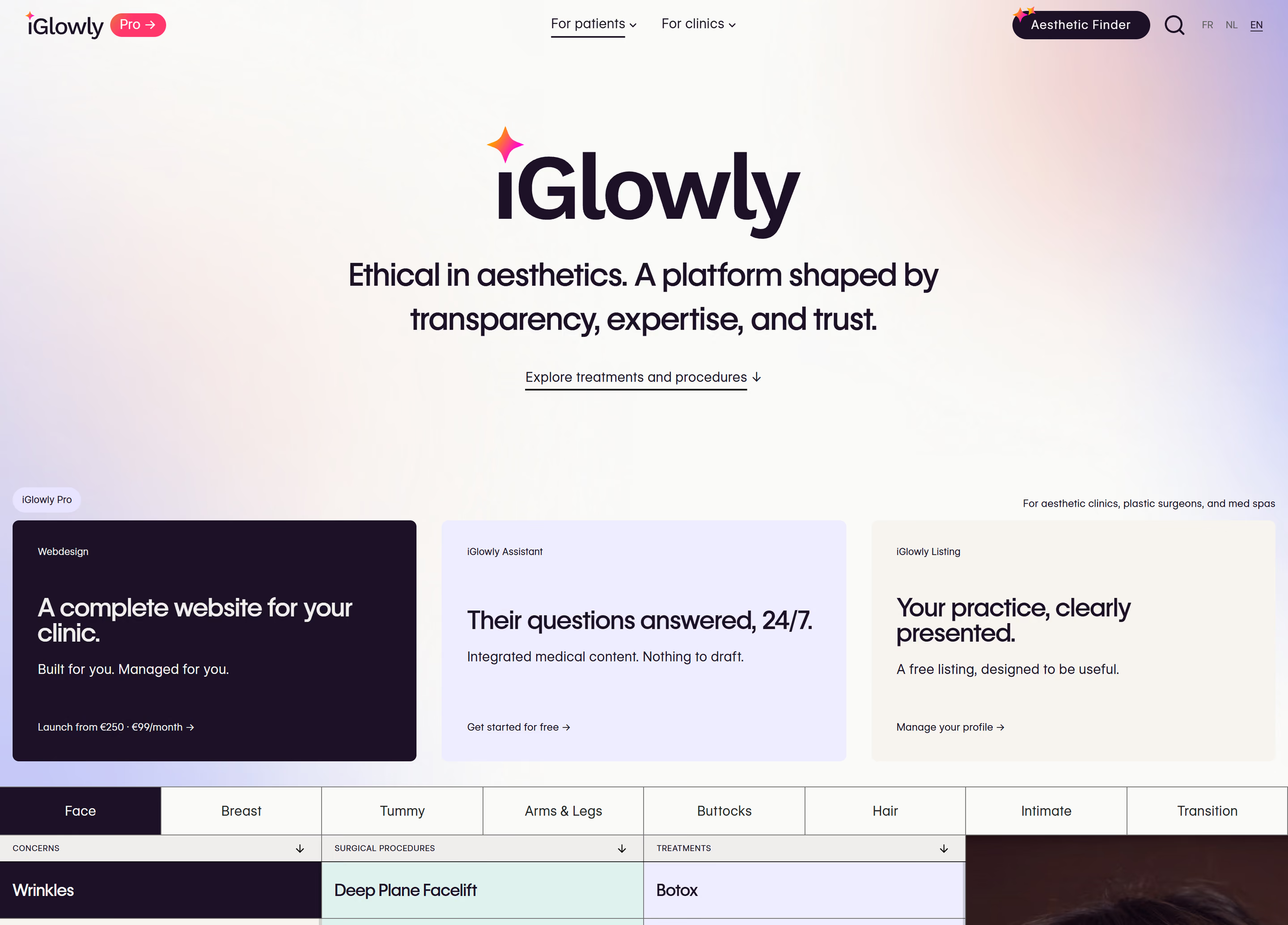
Starting with a concern
People don’t always know the name of the treatment they’re looking for. They know what bothers them: uneven skin tone, hooded eyelids or loose skin.
I built the Aesthetic Finder around that starting point. Visitors choose a body area and concern, then explore related surgical procedures and non-surgical treatments. Each option leads to a detailed guide explaining what it involves, its limitations, risks and recovery.
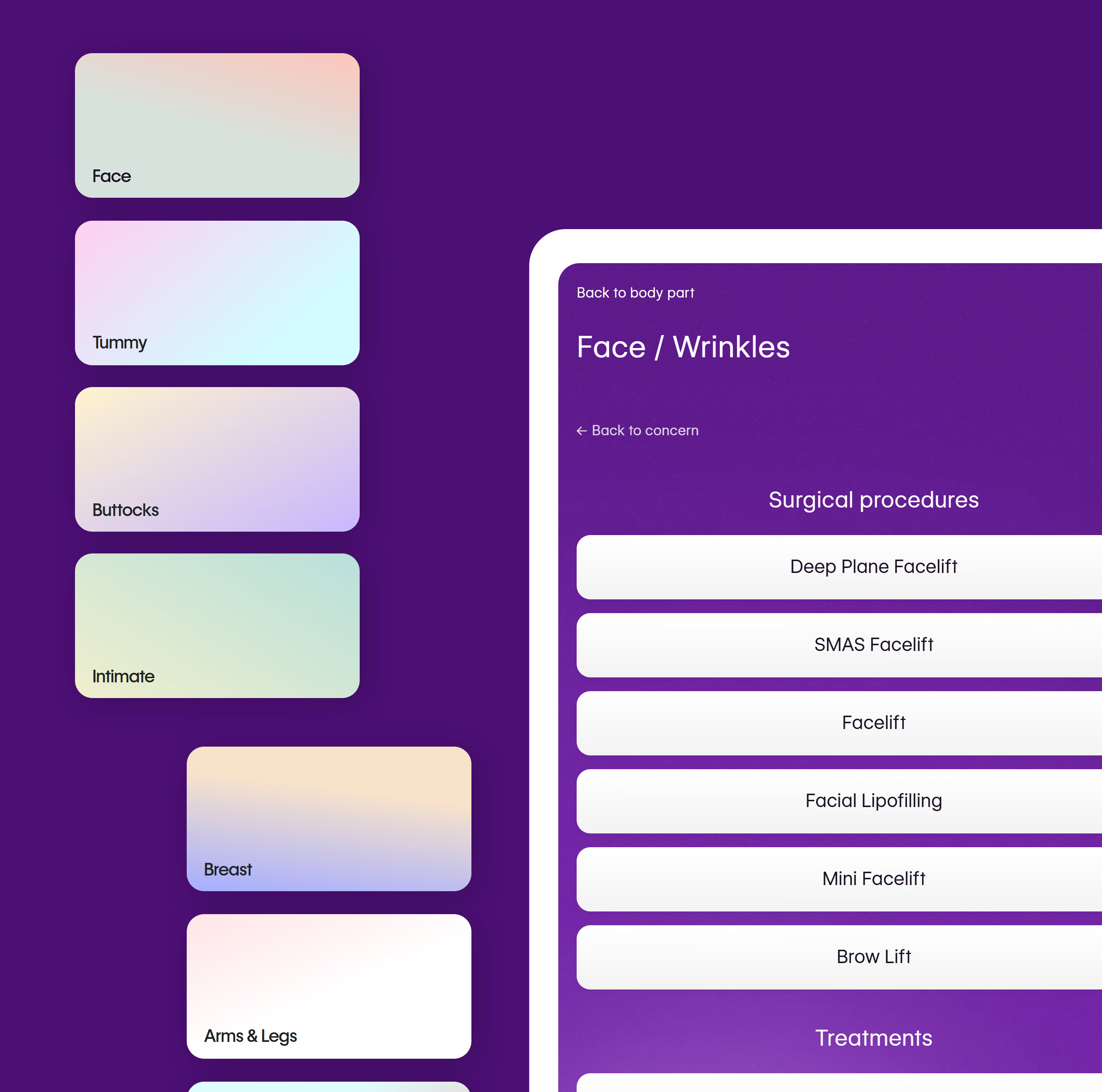
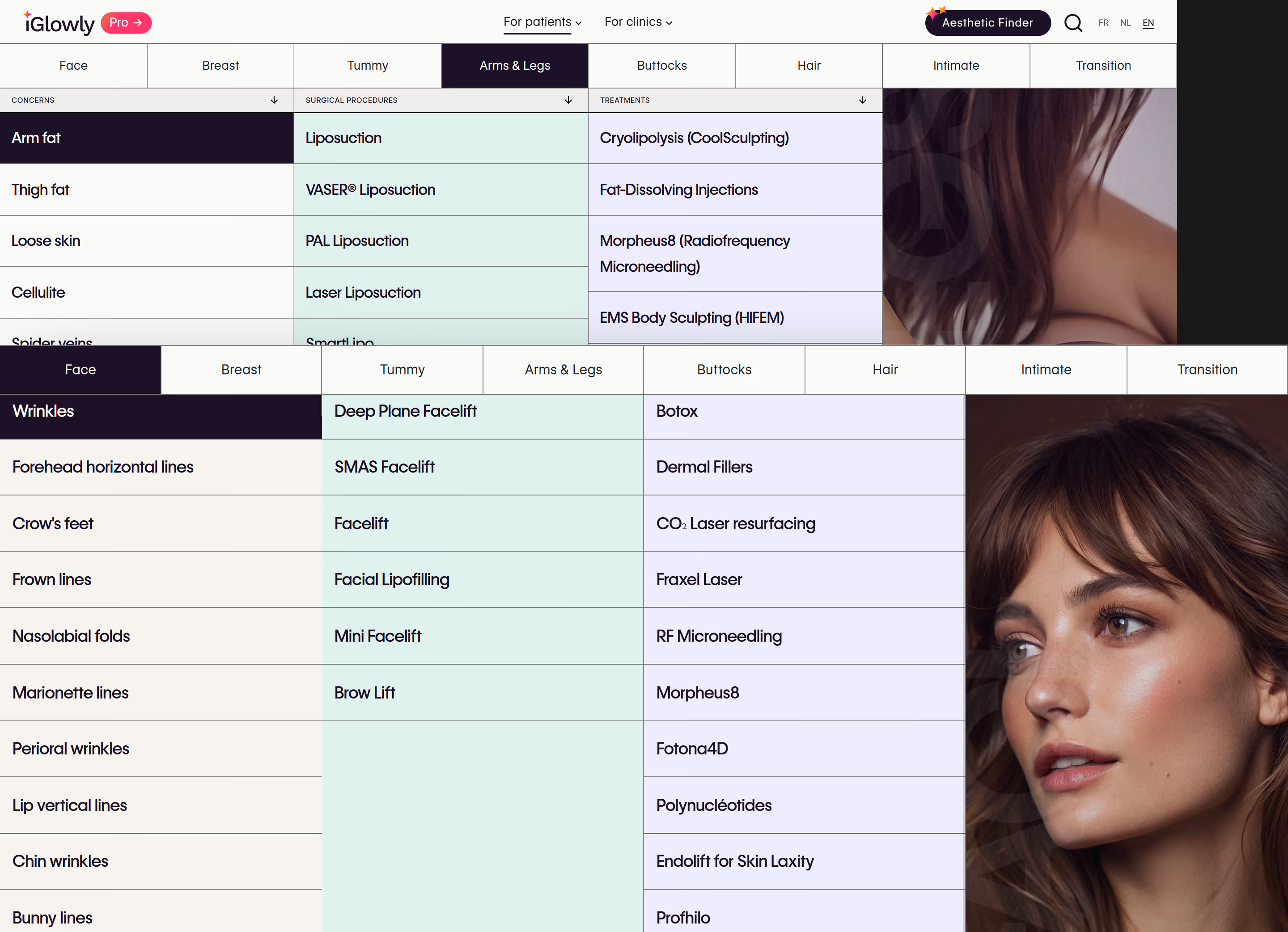
On desktop, the Finder presents concerns and options side by side, making it possible to explore without repeatedly opening new pages. Surgical procedures and non-surgical treatments have distinct columns and colours, making the options easier to scan.

Keeping guides and providers together
I didn’t want someone to finish reading a guide and then have to start again in a separate directory.
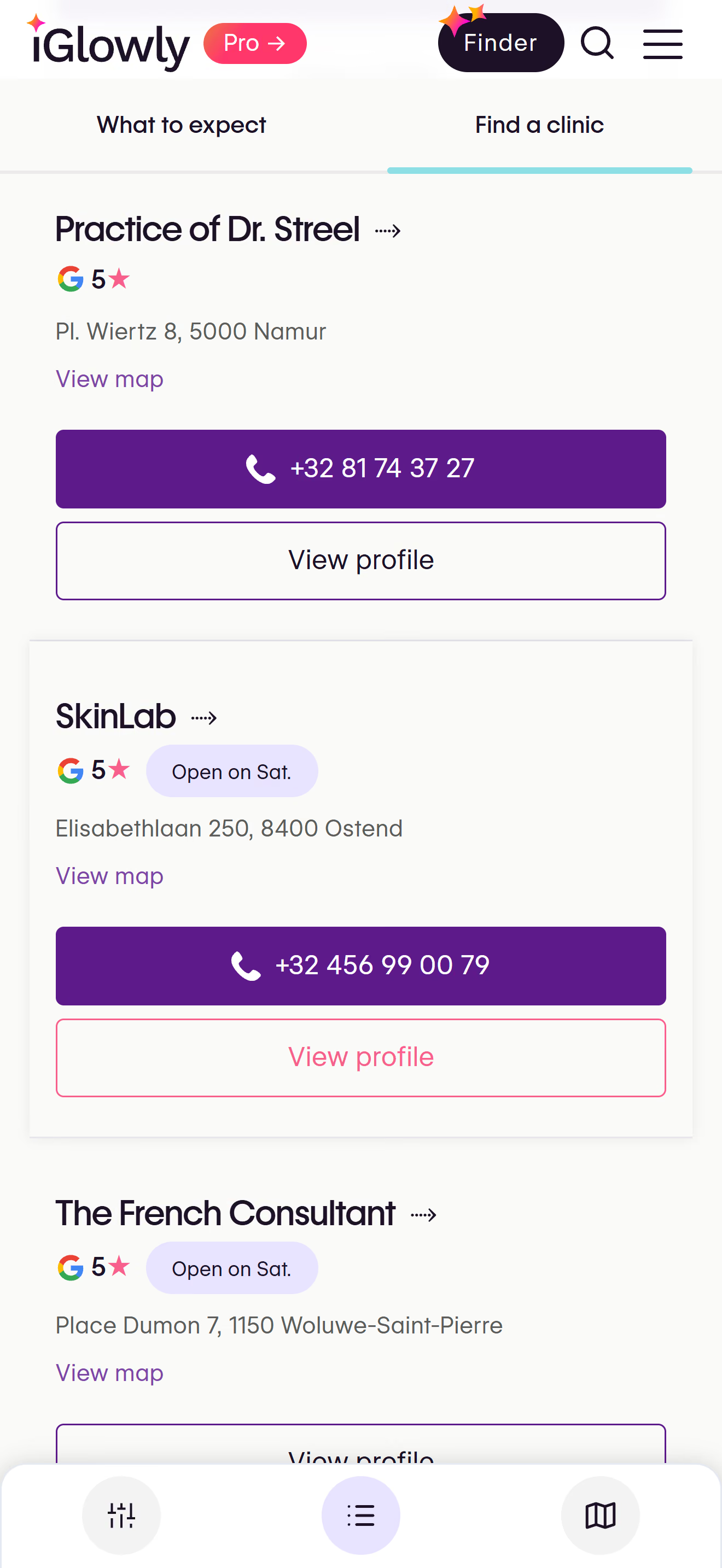
Each treatment guide includes a “Find a clinic” tab; surgical guides connect readers with surgeons performing that procedure. Visitors can move from learning about an option to exploring relevant providers within the same page.
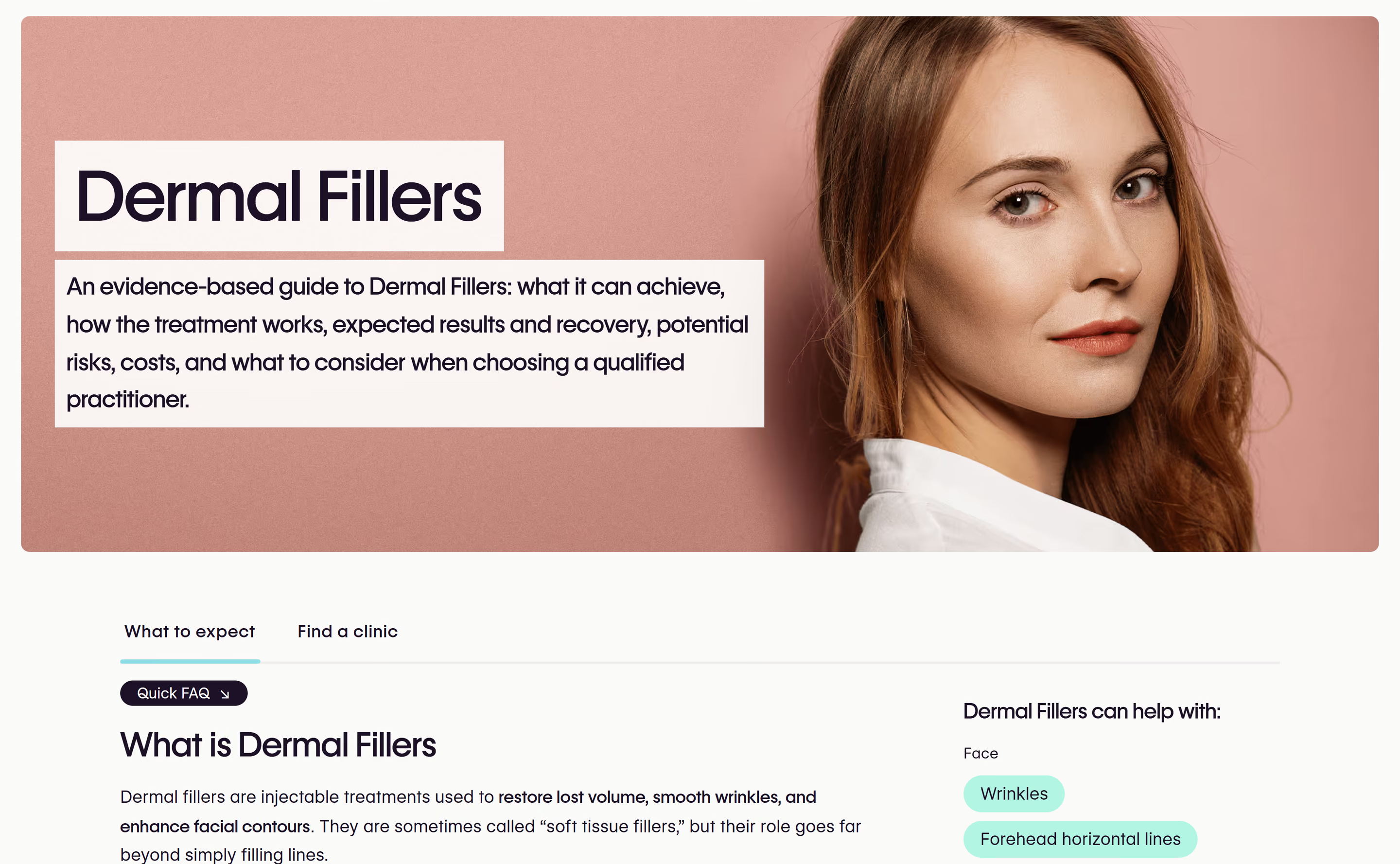
The connection also works in reverse. Guides link back to the relevant concerns in the Finder, so readers can explore alternatives. Someone arriving directly from search can discover the wider context instead of reaching a dead end.
Making detailed information easier to use
Aesthetic guides can become long and technical. I used clear headings, expandable sections and consistent layouts to make them easier to explore, while keeping references and supporting detail available.
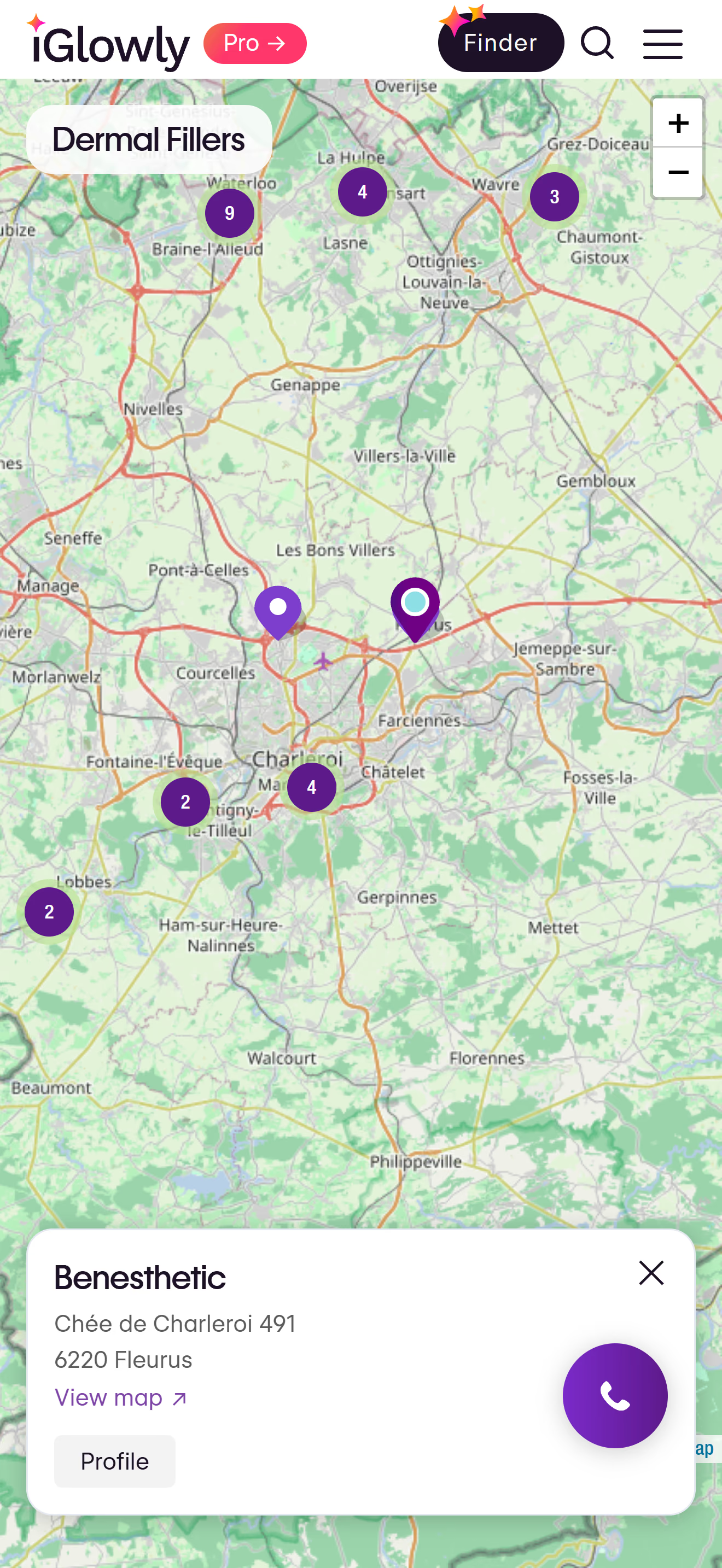
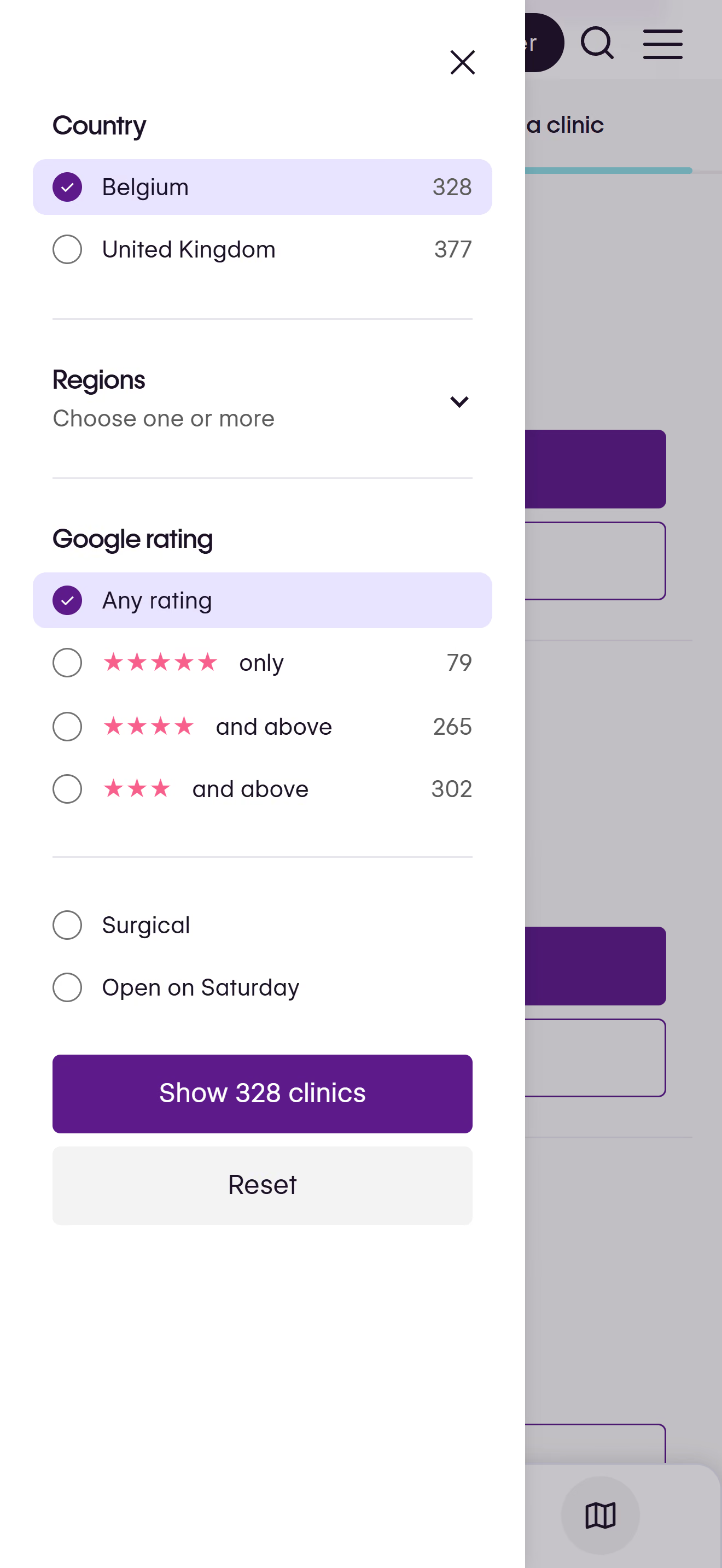
Provider listings bring practical information together: location, contact details, services and profile links. Filtering helps narrow the results, with a proximity option for people looking nearby.
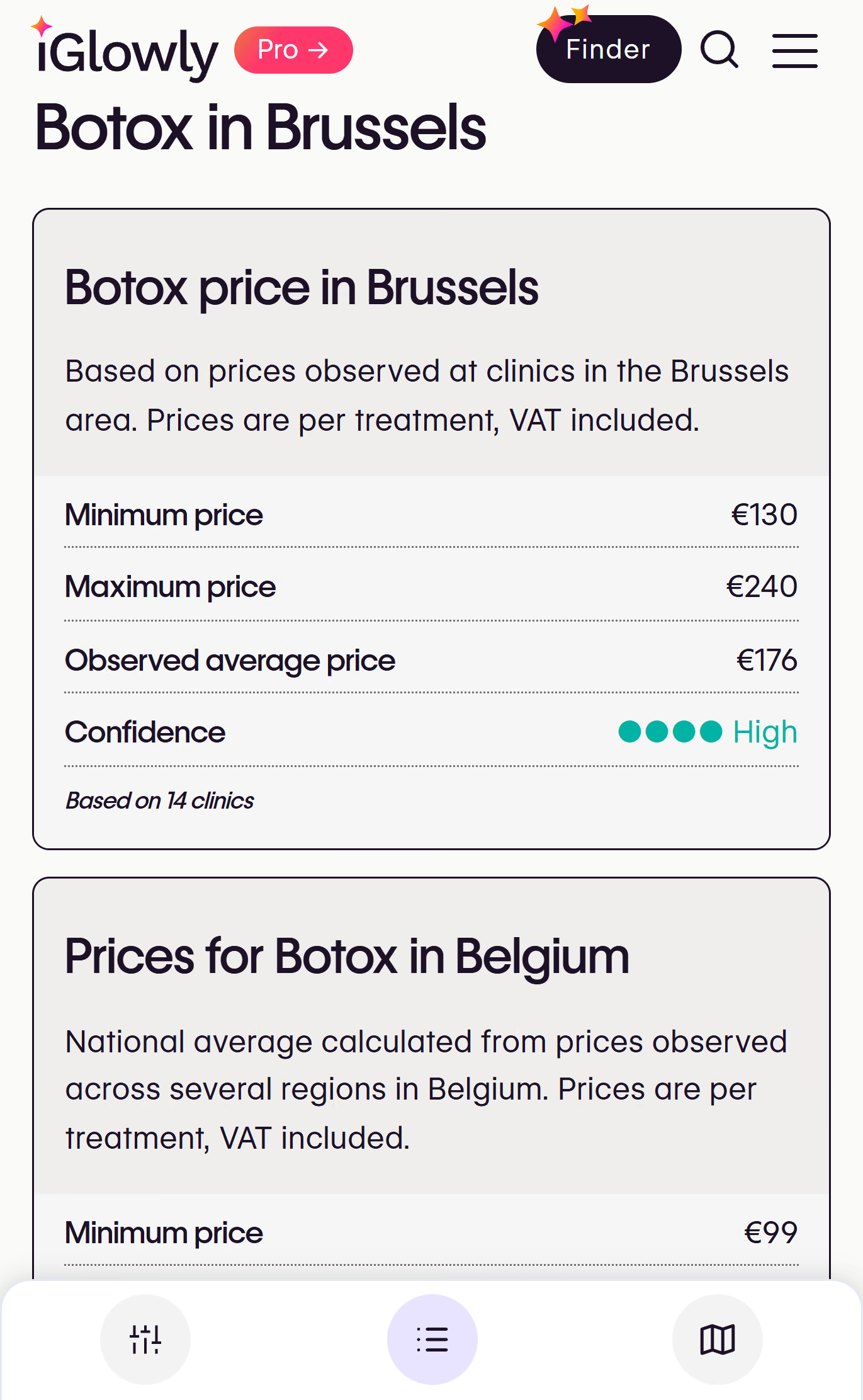
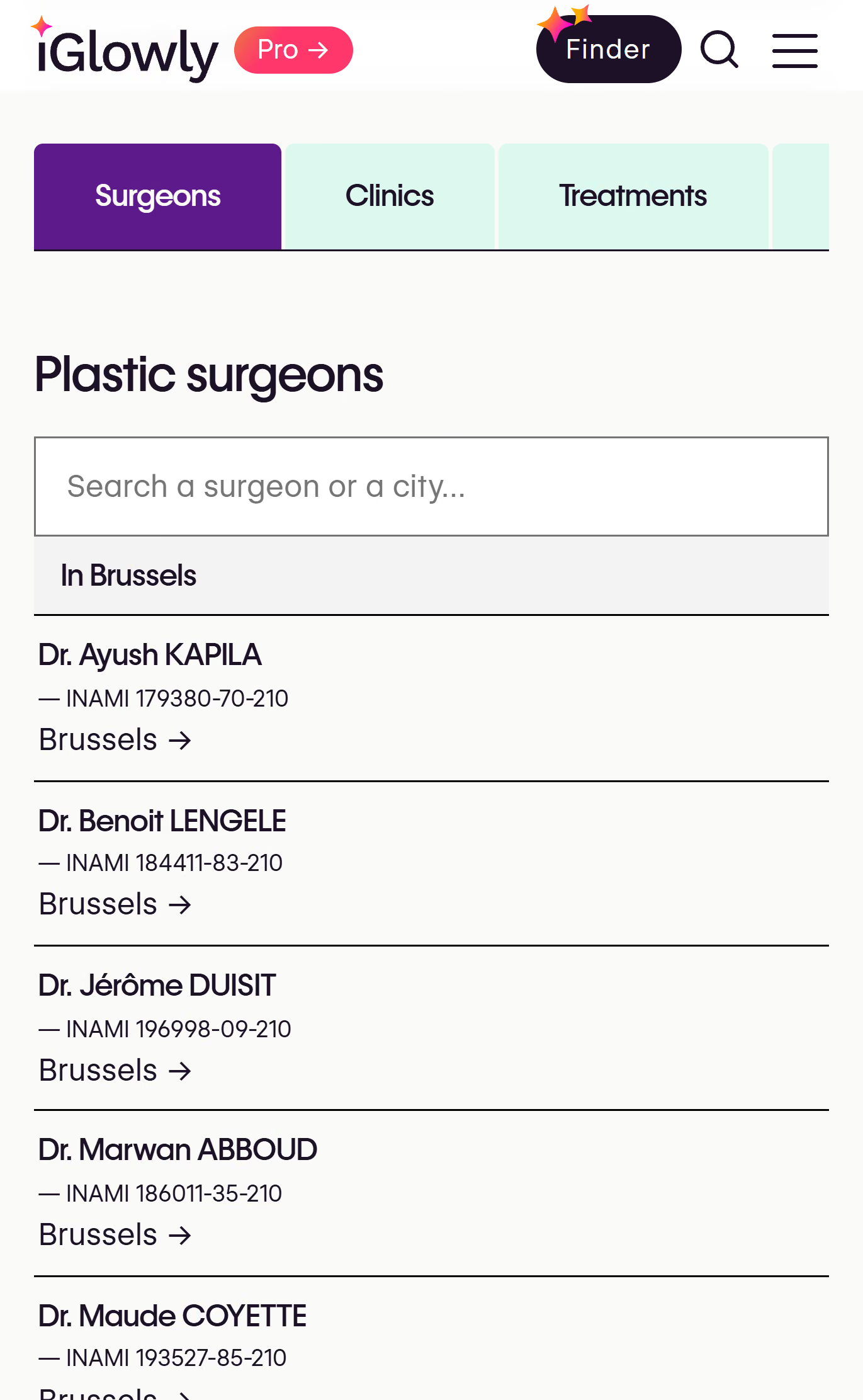
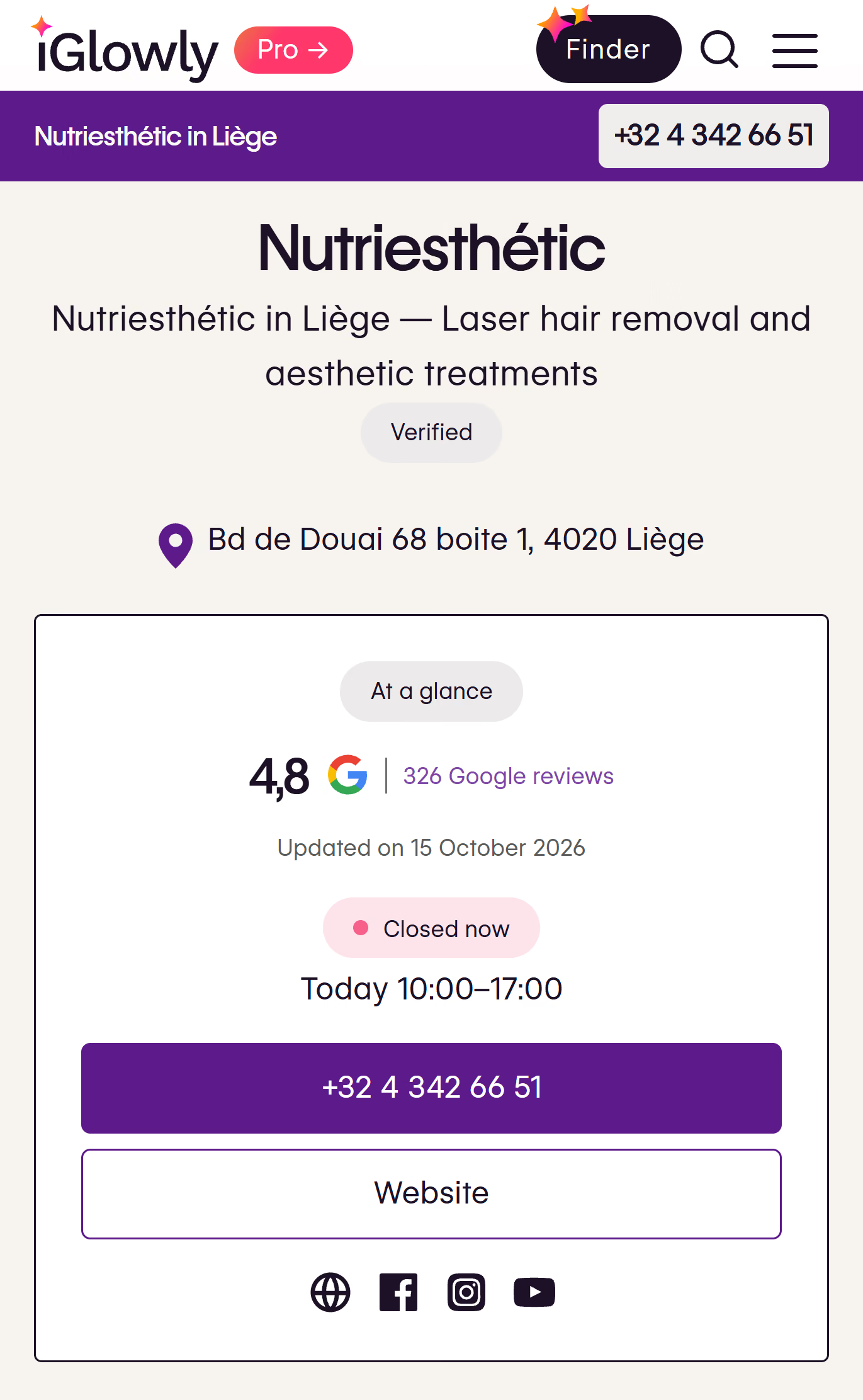
Behind the pages, body areas, concerns, treatments, providers and locations are connected, so visitors can start from any of them, including city pages that bring together local practitioners and available treatments.
Across the platform, the aim is to give visitors a useful next step while leaving them room to research and reconsider.

Two audiences, one platform
iGlowly has two main sections: one for patients and one for professionals.
The patient section brings together the Finder, guides, directories and editorial content. The Pro section presents clinic websites, iGlowly Assistant and professional listings, with its own product information and resources.

I gave each audience a clear entry point and navigation while maintaining a shared identity. The professional products follow the same thinking as the public platform: organise information around patients’ questions and make the next step easier to understand.
From Webflow to Astro
The platform initially ran on Webflow. As its content and functionality grew, I migrated it to Astro, hosted on Cloudflare, gaining more control over the code, page generation and deployment.
The move carried the existing design and connected content structure into a code-based project, making it easier to develop custom functionality and manage changes through Git.

 Astro

Built to keep growing
The platform is available in English, French and Dutch, with localised URLs and navigation. I also implemented page-specific metadata and structured data for guides, professional profiles and other content types.
Development continues as the platform expands, with reusable page structures and connected content supporting new guides, providers, locations and professional services.
